Do Fine Line Tattoos Fade?
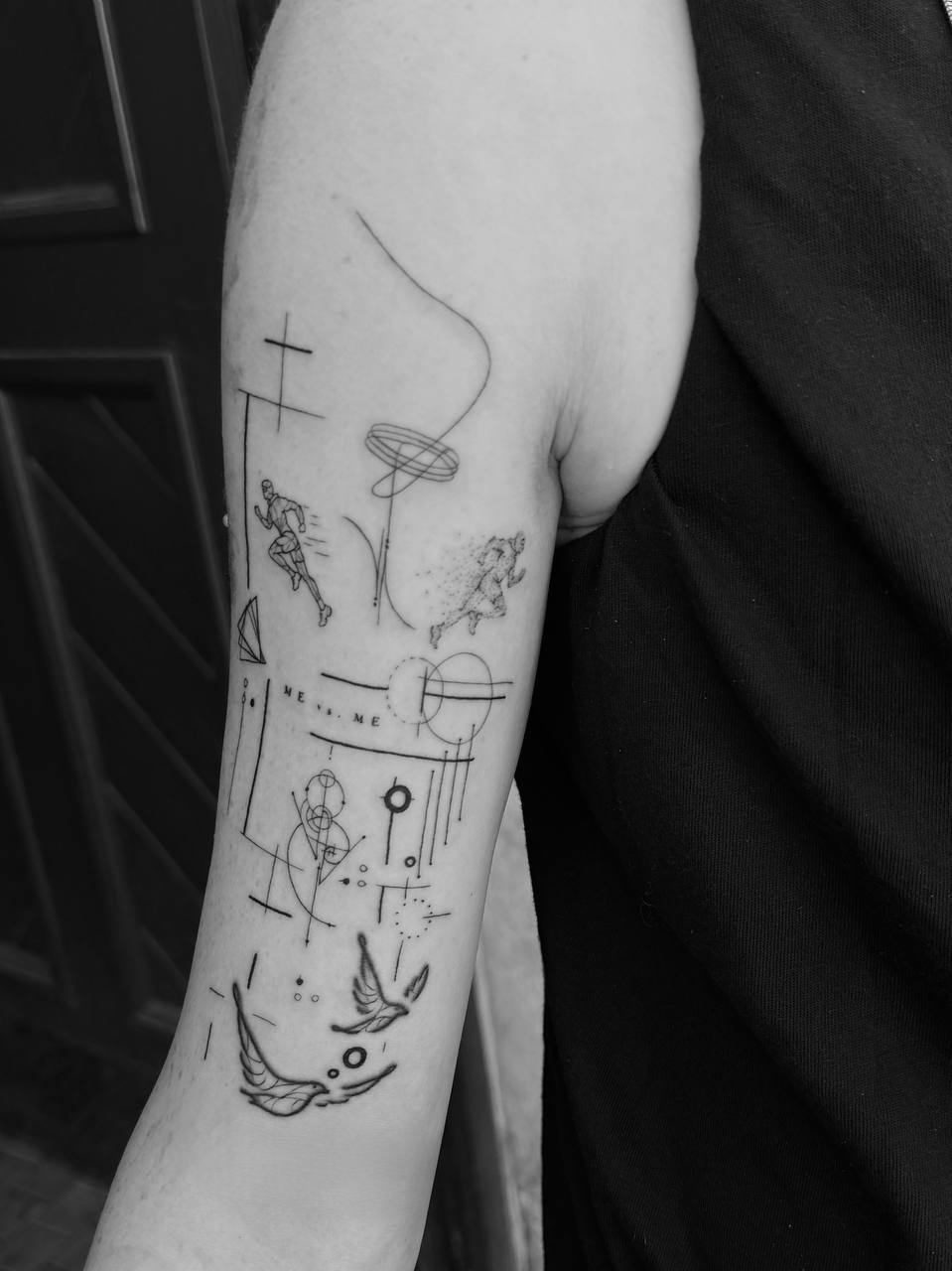
Short answer: yes, and so does every other tattoo. The useful question is how much, how fast, and what actually makes the difference.
This comes up at almost every fine line consultation, usually phrased as a worry that this style is somehow less permanent than a bold one. It is worth answering properly, because the real answer changes what you should ask for.
Why fine line shows its age sooner
A fine line tattoo is drawn with very few needles, sometimes a single one. Each line carries a small amount of pigment in a narrow channel. A traditional outline puts many times more ink into a line several times as wide.
Both lose pigment at roughly the same rate. The difference is what that loss looks like. On a bold line, losing some ink is invisible. On a hairline, the same loss is the difference between a crisp line and a soft one.
So fine line does not fade faster in any chemical sense. It shows what has faded sooner. That distinction matters, because it means the fix is not "choose a different style" but "build the tattoo so the softening does not hurt it".
What actually causes fading
01 · Sun. UV light breaks pigment particles into fragments small enough for your immune system to carry away. This is the biggest single factor and the only one you fully control.
02 · Placement. Skin that rubs, stretches or renews quickly loses ink faster. Hands, fingers, feet, the inner wrist and the folds at the elbow and knee are the hard cases.
03 · Depth. Too shallow and the ink leaves with the skin. Too deep and the line spreads under the surface. This one is the artist's job, not yours.
04 · Healing. Picking scabs, over-moisturising or letting a fresh tattoo burn in the first weeks costs line quality permanently.
05 · Skin and time. Everyone's immune cells carry a little pigment away every year. Thin or sun-damaged skin holds less of it.
Placement changes the answer more than anything else
| Placement | How it ages | What to know |
|---|---|---|
| Upper arm, inner forearm, shoulder, thigh, back, calf | Best | Covered, stable skin with little friction. Fine line holds for years here. |
| Collarbone, sternum, ribs | Good | Little friction, but thin skin. Keep the spacing generous. |
| Behind the ear, back of the neck | Good if covered | Fine under hair, high sun exposure if not. |
| Ankle, foot | Harder | Shoes rub constantly and feet catch a lot of summer sun. |
| Inner wrist, hand, fingers | Hardest | Washing, friction and daily sun. Expect touch-ups every year or two. |
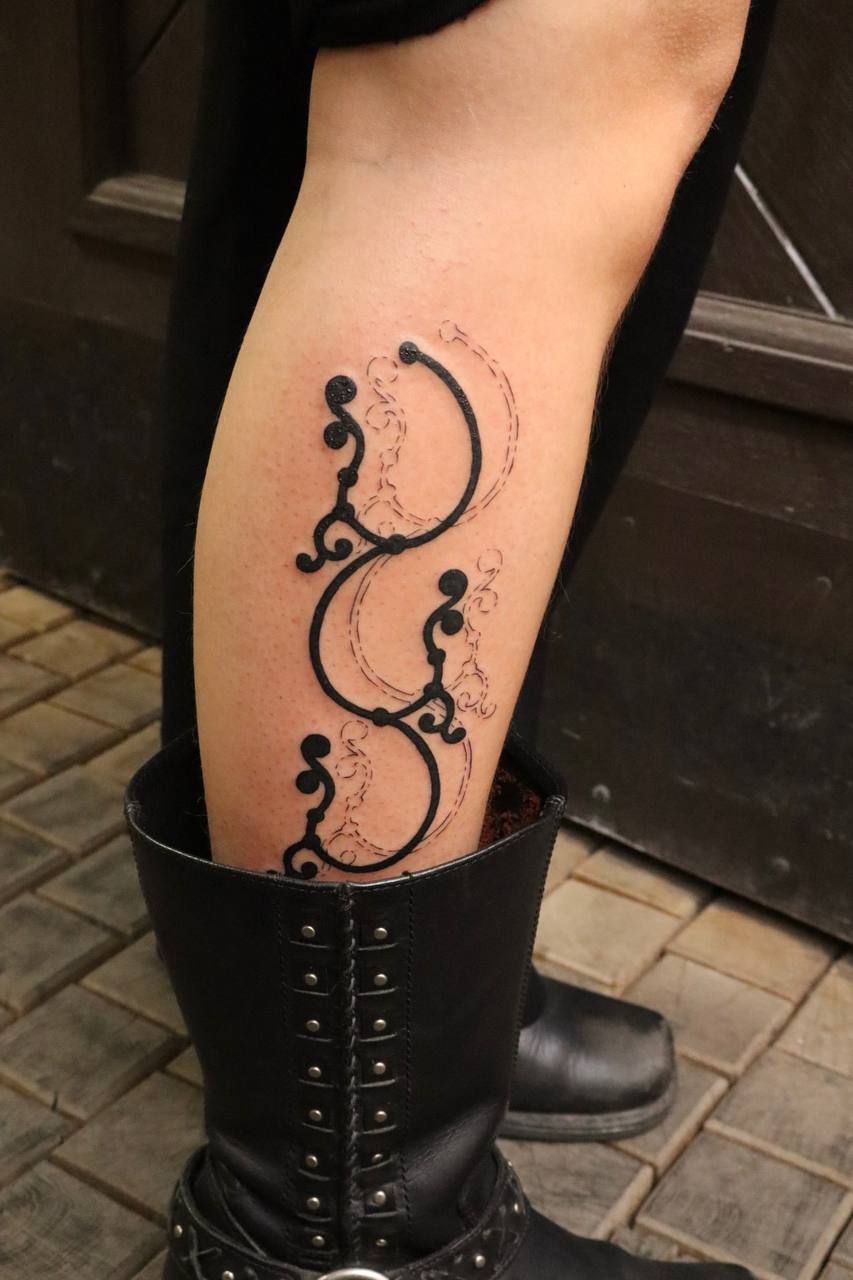

None of this is a reason to avoid a hand tattoo. It is a reason to decide with your eyes open: have the piece you want, and know in advance whether it is the kind that will want revisiting.
Softening and blowout are not the same thing
These get confused constantly, and it is worth being able to tell them apart.
Natural softening happens over years. A hairline widens very slightly, the edges go a little less sharp, black cools toward a soft grey. It is even across the whole piece, and it is what every tattoo does.
Blowout is ink pushed too deep, spreading sideways into the fat layer and leaving a blue-grey haze beside the line. It appears within weeks, not years, it usually affects some lines and not others, and it is a technique problem rather than ageing.
If you see a grey shadow next to your lines a month after the session, that is worth raising with your artist. If your lines look very slightly softer after six years, that is the tattoo doing what tattoos do.
What you can actually do about it
- Sunscreen. SPF 30 or higher, every time the tattoo is in the sun, for the life of the tattoo. Nothing else on this list comes close.
- Heal it properly. The first month sets the ceiling for how good the piece can look. Our aftercare guide covers it day by day.
- Do not crowd the design. Detail squeezed into three centimetres will merge as the lines soften. When an artist tells you an idea needs to be bigger, that is not an upsell, it is the difference between a readable tattoo in ten years and a grey smudge.
- Choose placement with ageing in mind. Or choose the placement you love and accept the maintenance. Both are fine, as long as it is a decision.
- Keep the skin moisturised. Hydrated skin is more transparent, and lines read more clearly through it.

How often does a fine line tattoo need a touch-up?
On a good placement, with sunscreen, plenty of pieces need nothing at all for five years or more. On hands, fingers and feet, every one to three years is realistic.
A touch-up is usually far quicker than the original session, because the composition already exists and only the lines need refreshing. If you had the piece done here, send us a photo and we will tell you whether it needs anything yet.
Does this mean you should pick something bolder?
Not unless you want something bolder. A heavy tattoo you chose out of caution ages just as surely, and you have to live with it in the meantime.
If you want a fine line tattoo, have one. Build it to last: enough space between the elements, a size that gives the detail room, a placement that is not under constant friction, and sunscreen from the day it heals. That is the whole recipe.
How we approach it at STIN
Fine line is the style Anna works in most, so most of this comes from watching the same pieces come back through the studio years later. In practice it means we will often suggest a slightly larger size than you had in mind, more air between elements, and a placement a few centimetres from the one you first pointed at.
All of that is open to discussion, and the consultation is free. Come in, bring your references, and we will tell you honestly how the idea will hold up where you want it.
Frequently asked questions
How long before a fine line tattoo starts to fade?
On a well-chosen placement with sun protection, noticeable softening usually takes several years. On hands and feet it can show within one to two.
Do fine line tattoos fade more than bold ones?
They show fading sooner rather than fade faster. The same amount of lost pigment is visible on a hairline and invisible on a thick outline.
Will my fine line tattoo disappear completely?
No. It softens and lightens over many years, it does not vanish.
Can a faded fine line tattoo be fixed?
Yes. Most can be refreshed by going back over the existing lines, sometimes very slightly heavier so the next decade is easier.
Does black ink turn grey or blue?
Over many years black lightens toward a soft grey, and sun exposure speeds that up. Good black ink does not turn green or blue the way older pigments once did.
Are white ink and very light grey a good idea?
They fade fastest of anything and can heal patchy. Ask before committing to a design that depends on them.
Does sunscreen really make a difference?
It is the single biggest thing you control. Two identical tattoos, one protected and one not, look very different after five summers.
Are finger tattoos worth getting?
They are, if you accept that they are maintenance. Fingers rub, wash and catch sun all day, and the skin there renews quickly.
Thinking about a fine line piece?
Send us the idea, the placement you have in mind and roughly the size. We will tell you what will hold up there and what we would change.
Consultations are free, and you are welcome to come in and talk it through before deciding anything.
Book a session →